Skip to content

Rear Vent Wood Stoves

The ceiling is finished, the attic is inaccessible, or the roof structure makes a new chimney too expensive to justify. A rear vent wood stove routes exhaust horizontally through an exterior wall instead, bypassing all three with a short pipe run and a wall thimble. Back vented wood burning stoves solve this problem across manufactured homes, converted outbuildings, and site-built houses where the vertical chimney path is simply unavailable.

Every rear exit installation uses the same basic components: a stove pipe elbow at the rear flue collar, a short horizontal run, a wall thimble, and an exterior cap. Fire Pit Surplus carries rear vent wood stoves as an authorized dealer, with EPA 2020 certified models in freestanding steel and cast iron configurations from Drolet, Timberwolf, MF Fire, and Ashley Hearth.

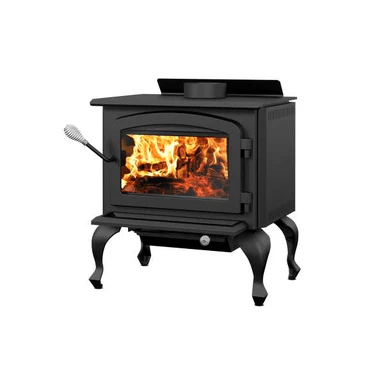
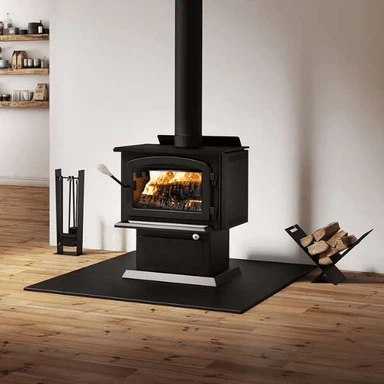
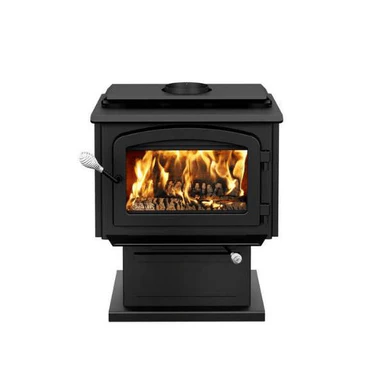
  • Drolet Columbia Ii Wood Stove Db03016 In Lifestyle Photo
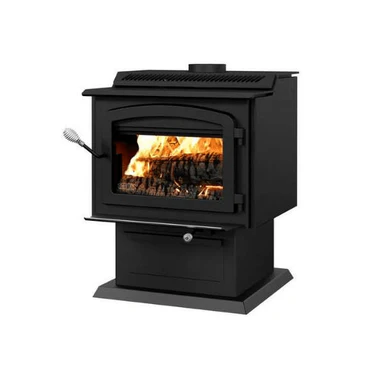
    Drolet Columbia Ii Wood Stove Db03016 In White Background Side View
    Drolet
    $1,299.00

    Drolet Columbia II Wood Stove: A New Way to Heat Your Home Safely and Efficiently Looking for a safe and efficient way to heat your home? Look no f...

    View full details
    $1,299.00
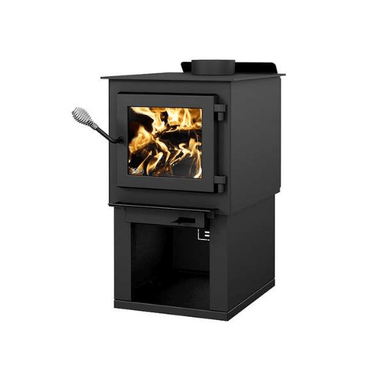
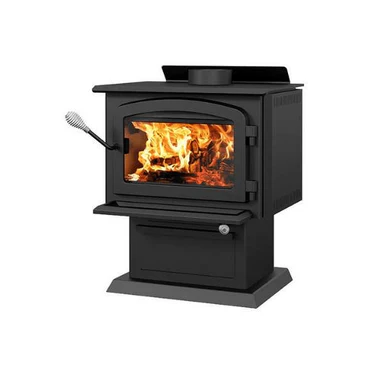
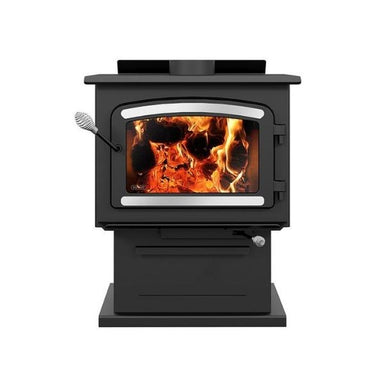
  • Drolet Escape 1800 Wood Stove Black Door On Pedestal Db03102 In Lifestyle Photo
    Drolet Escape 1800 Wood Stove Black Door On Pedestal Db03102 In White Background Side View
    Drolet
    $1,549.00

    Drolet Escape 1800 Wood Stove on Pedestal: The Most Efficient Central Heating System Looking for a wood stove that's both stylish and efficient? L...

    View full details
    $1,549.00
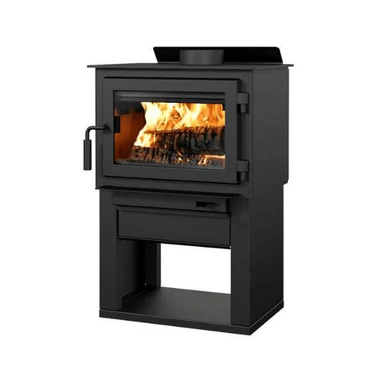
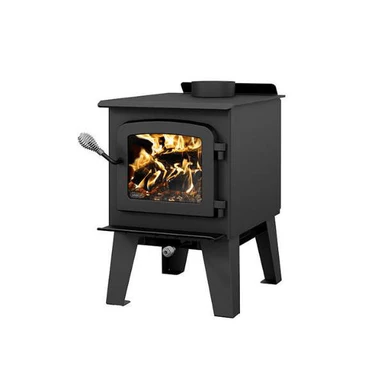
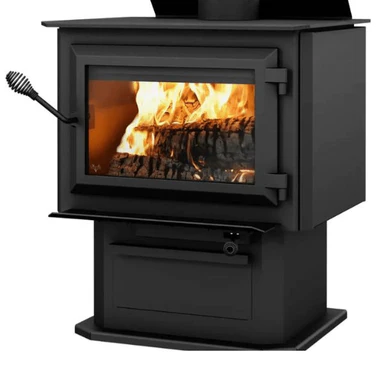
  •    Right Side View Of Drolet Fox Wood Stove With Flame On A White Background
    Drolet Fox Wood Stove Left Side View On A White Background
    Drolet
    $1,110.00

    Achieve Comfort and Save Money With the Drolet Fox Wood Stove DB03186 The Drolet Fox wood stove is perfect for those small spaces that you want to ...

    View full details
    $1,110.00
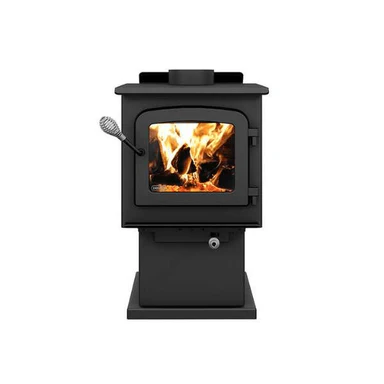
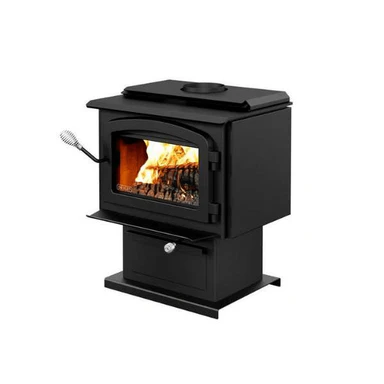
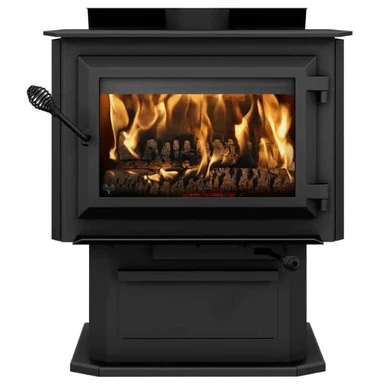
  • Buck Stove Model 21NC Black Door
    Buck Stove Model 21NC
    Buck Stove
    from $2,438.00

    Buck Stove Model 21NC Non-Catalytic Wood Stove 800 to 1,800 Sq. Ft. Freestanding Stove and Fireplace Insert with Blower The Buck Stove Model 21NC ...

    View full details
    from $2,438.00

Why Choose a Rear Vent Wood Stove

  • No vertical chimney required: Horizontal venting through an exterior wall eliminates the need for a full chimney system. This makes rear vent installation viable in rooms where a top exit would require cutting through multiple floors, finished ceilings, or complex roof structures.
  • Shorter, simpler pipe runs: A rear exit configuration typically uses two to four feet of stove pipe and a single wall thimble. Shorter pipe runs mean less heat loss, lower installation cost, and fewer connection points to maintain over time.
  • Works with existing structures: Back vented wood burning wood stoves retrofit into homes with slab foundations, low attics, or finished second floors where vertical chimney installation would require significant structural work.
  • Compact installation footprint: Rear flue stoves are designed to sit close to the exterior wall they vent through. This works in tighter spaces where a top vent stove would need to be positioned further into the room to accommodate angled pipe runs.

Top Rear Vent Wood Stoves For Sale

Best Mid-Range Rear Vent Wood Stove for Primary Heating

Drolet Escape 1500 Wood Stove

Drolet Escape 1500 rear vent wood stove EPA 2020 certified steel

The Drolet Escape 1500 is a steel, EPA 2020-certified wood stove that covers up to 1,500 square feet and supports rear exit venting through the rear flue collar. Steel construction heats the room faster than cast iron, making this the most practical pick for primary-use installations where heat recovery time between fires matters. The rear flue collar accepts standard stove pipe for a direct horizontal run to an exterior wall.

  • Steel construction; EPA 2020 certified wood stove
  • Heats up to 1,500 square feet
  • Rear flue collar supports horizontal wall-exit pipe installation

Best Cast Iron Rear Flue Wood Stove for Long Burn Time

Drolet Cape Town 1800 Cast Iron Wood Stove

Drolet Cape Town 1800 cast iron rear flue wood stove 1800 sq ft

The Drolet Cape Town 1800 is a cast iron wood stove rated for up to 1,800 square feet, with a rear flue collar that positions the exhaust outlet for a direct horizontal run to an exterior wall. Cast iron construction heats more slowly than steel but retains warmth for hours after the fire settles, making it the right choice for rooms that need sustained heat from a single overnight load.

  • Cast iron construction; retains radiant heat for hours after the fire settles
  • Rated for up to 1,800 square feet
  • EPA 2020 certified; rear flue collar for wall-exit pipe installation

Best Compact Rear Vent Wood Stove for Smaller Spaces

Ashley Hearth AW1120E-P Pedestal Wood Stove

Ashley Hearth AW1120E-P pedestal wood stove compact rear vent 1200 sq ft

The Ashley Hearth AW1120E-P is a pedestal-mounted steel wood stove rated for 1,200 square feet, sized for cabins, secondary rooms, and supplemental heating zones where a full-output stove would overwhelm the space. The compact pedestal design and rear flue compatibility keep the installation footprint tight against the exterior wall, with no excess pipe run into the room.

  • Steel construction with pedestal base; covers up to 1,200 square feet
  • Compact footprint for cabins, secondary rooms, and zone heating
  • EPA 2020 certified; rear flue collar for wall-exit installation

What to Look for in a Rear Vent Wood Stove

Venting Configuration and Wall Clearances

  • Rear flue collar position: Confirm the stove has a rear flue collar, listed as a rear exhaust outlet on some manufacturer spec sheets. Some models have both a top and rear collar with one blocked at the factory. Verify the rear collar is clear and sized for your pipe diameter (typically 6 or 8 inches) before purchasing.
  • Back panel clearance: Each rear vent stove specifies a minimum clearance from the rear of the stove to the combustible wall behind it. This distance typically ranges from 6 to 18 inches depending on the model. A listed heat shield with a 1-inch air gap between the shield and the wall can reduce that required clearance by up to 66 percent, per wood heat org clearance guidance; confirm the reduction value in the manufacturer's installation manual before finalizing placement.
  • Pipe accessories for wall exit: A rear exit installation requires a stove pipe elbow at the stove collar, a horizontal pipe run, a wall thimble through the exterior wall, and an exterior cap. Single wall stove pipe is standard for the interior horizontal run and requires 18 inches of clearance to combustibles under NFPA 211; double wall stove pipe reduces that clearance requirement and may be required by local code for sections near walls or the ceiling. Source all components before installation day.

BTU Output and Heating Capacity

  • Match BTU to room volume: Wood stove BTU ratings assume a reasonably insulated space with 8-foot ceilings. For homes with poor insulation, high ceilings, or open floor plans, size up by 20 to 30 percent. Under-sizing forces constant high-output burns that shorten stove life.
  • 50,000 BTU is the midpoint: Most residential rear vent installations fall between 40,000 and 80,000 BTU. Outputs below 35,000 BTU suit small cabins or zone heating. Outputs above 80,000 BTU target large open-plan homes or commercial heating applications.
  • Wood species and moisture content affect real-world output: BTU ratings assume dry, seasoned hardwood at 20 percent moisture or below. Wet wood burns cooler, produces more creosote, and delivers significantly less heat per load than the rated output suggests.

EPA 2020 Certification and Clean Burn

  • EPA 2020 standard: All wood stoves sold in the US after May 2020 must meet 2.0 grams per hour particulate emissions. Certified models burn more completely, produce less creosote, and extract more heat from each piece of wood than older stoves.
  • Secondary combustion: EPA-certified stoves achieve low emissions through a secondary air wash that burns smoke gases before they exit through the flue. This reduces visible smoke output and increases effective BTU delivery per load of wood.
  • Catalyst vs. non-catalyst: Catalytic stoves use a combustor element that lowers the ignition temperature of smoke gases, producing clean burns at low heat outputs. Non-catalytic stoves use baffles and secondary air tubes to achieve cleaner combustion without a replaceable element. Both meet EPA 2020; the choice affects maintenance routine, not heat output.

Cast Iron vs. Steel Construction

  • Cast iron: Cast iron heats more slowly than steel but retains heat significantly longer after the fire settles. A cast iron rear vent wood stove continues radiating warmth for hours after the last log burns down, making it well suited to spaces that need sustained overnight heat. Browse cast iron wood stoves for the full cast iron lineup.
  • Steel construction: Steel heats faster and costs less than cast iron. It is the standard choice for most primary-use residential installations where the stove is used for several hours at a time and heat recovery time between fires matters.
  • High-efficiency models: High-efficiency wood stoves in both cast iron and steel achieve 75 to 85 percent combustion efficiency, compared to 60 to 65 percent for standard certified models. The difference in real-world fuel consumption over a full heating season is significant for homeowners using a wood stove as a primary heat source.

Rear Vent Wood Stove Brands at Fire Pit Surplus

Drolet

Drolet is one of the most recognized wood stove manufacturers in North America, with a range of rear exit wood stove models across a broad BTU output span. Drolet rear vent stoves are EPA 2020 certified, from compact cabin models through large whole-home units.

Timberwolf

Timberwolf builds a full lineup of freestanding wood stoves with rear flue options in both steel and cast iron configurations. Their models are known for a clean, traditional aesthetic and solid EPA-certified performance across a range of heating capacities. Timberwolf rear vent stoves pair well with standard residential pipe and thimble installations.

MF Fire

MF Fire produces the Nova, a rear flue wood stove with strong search visibility in this category. The Nova is a steel, EPA-certified model with a modern design profile and competitive BTU output for mid-size rooms.

Osburn and Others

Osburn covers mid-range rear vent installations with both cast iron and steel options rated for 1,500 to 2,500 square feet. Englander, Buck Stove, Ventis, and US Stove Company round out the lineup at entry-to-mid price points, with models suited to straightforward residential installations and zone heating.

Why Buy from Fire Pit Surplus

Fire Pit Surplus carries rear vent wood stoves as an authorized dealer for every brand we stock. That means genuine products, accurate installation specifications, and full manufacturer warranties honored on every order.

  • Price Match Guarantee: We match competitor prices on identical products. Find the same rear vent wood stove for less and we will match it.
  • Fast and Free Shipping: Every order ships free with secure, insured delivery. Wood stoves ship fully packaged with all components included.
  • Expert Support: Real people who know these products answer your questions before purchase, during delivery, and after installation.
  • Authorized Dealer: We carry every brand as an authorized retailer, which means genuine products and full manufacturer warranties honored on every order.
  • Flexible Financing: Pay over time with financing options that let you get the setup you actually want, not the one the budget forced you to settle for.

Frequently Asked Questions

How do I vent a wood burning stove through the wall?

Install a stove pipe elbow at the rear flue collar, connect a short horizontal pipe to a listed wall thimble in the exterior wall, and cap the outside opening. A licensed installer should confirm local clearance codes and pipe sizing before the stove is positioned in the room.

What is the difference between a rear vent and top vent wood stove?

Top vent stoves route exhaust vertically through the roof and require a full chimney system. Rear vent stoves exit horizontally through an exterior wall with a short pipe run and wall thimble. Heat output is the same; the choice depends on which installation the home structure allows.

Which wood stove brands offer rear vent capability?

Drolet, Timberwolf, MF Fire, Osburn, Englander, and Buck Stove all produce rear exhaust wood stoves with flue collar options for horizontal wall exit. Not every model in a brand's lineup offers this configuration; always confirm the flue collar position on the specific product specification sheet before purchasing.

What is the 3-2-10 rule for wood stoves?

The 3-2-10 rule requires a chimney to extend 3 feet above the roof penetration and 2 feet above any structure within 10 feet horizontally. This applies to vertical chimney exits only. Rear vent installations follow different wall clearance and pipe length requirements.

How close to the wall can a rear vent wood stove sit?

Minimum back panel clearance varies by model and is listed in the installation manual. Most rear vent stoves need 6 to 18 inches from the stove back to the combustible wall. A listed heat shield can reduce required clearance; confirm the manufacturer's specifications before finalizing placement.

Shop Rear Vent Wood Stoves at Fire Pit Surplus

A rear vent wood stove solves a specific installation problem: getting reliable wood heat into a room that cannot accommodate a vertical chimney. Whether the constraint is a finished ceiling, a slab foundation, or a complex roof structure, a rear exit configuration delivers the same heat output through a simpler, shorter pipe run. Every model in this collection is EPA 2020 certified and sold as a complete, authorized unit with full manufacturer warranty.

If your installation calls for a unit that fits inside an existing fireplace opening, browse wood stove inserts; they use the existing masonry structure for venting and require no new wall penetration. For questions about rear flue clearances, pipe sizing, or matching a stove to your room volume, contact the Fire Pit Surplus support team before placing your order.